Confirm that the application was denied
First check the actual status. A request for more information or an application still under review needs a different response from a final denial. Read the message carefully and use the provider's official contact details if it is unclear.
The steps here concern a personal credit-card application. A declined purchase is a separate problem, and business-credit applications can have different notice rules.
Find the reason, or the instructions to request it
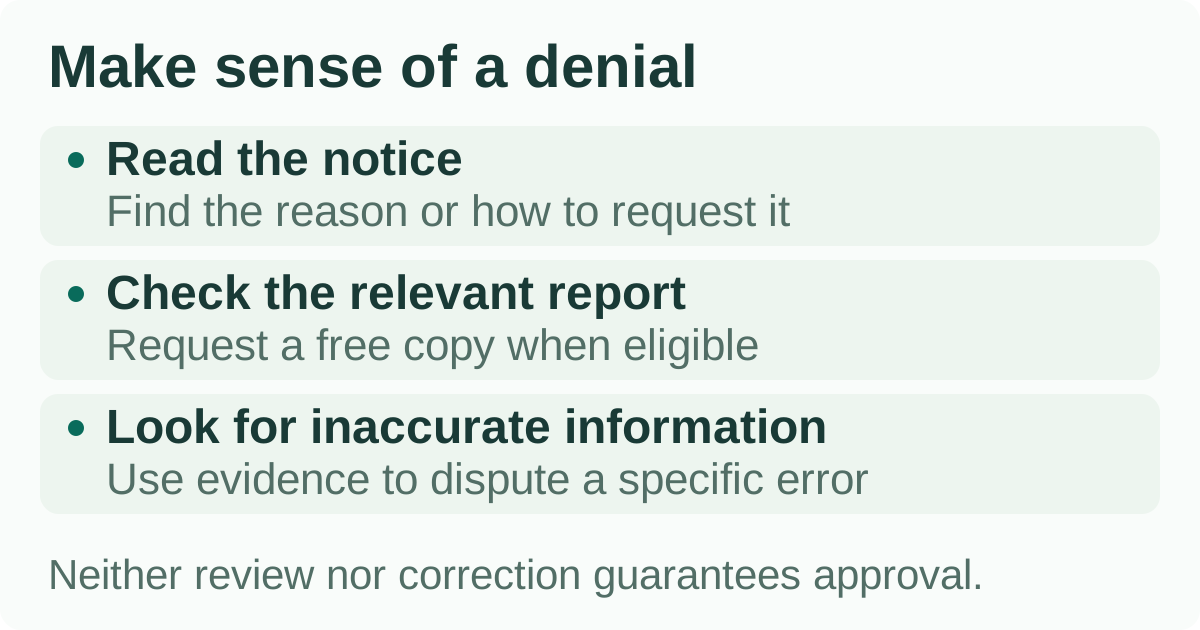
For a personal credit application, an adverse-action notice must include the specific reasons for the decision or explain your right to request them. The notice may use ordinary wording rather than the phrase “adverse action.”
If the notice offers a way to request the reasons, follow its instructions within 60 days of the creditor's notification. Save the notice and your request. Understanding the stated reason is more useful than guessing from your credit score alone.
Keep the two requests separate
If the denial was based on a credit report, you have a separate right to a free report from the credit reporting company identified in the notice. Request it within 60 days after receiving the notice.
Scroll sideways to see every column.
| What you need | Who to contact | When to act |
|---|---|---|
| Specific reasons, if the notice says to request them | The creditor's contact listed in the notice | Within 60 days of the creditor's notification |
| The report used in a report-based denial | The credit reporting company identified in the notice | Within 60 days after receiving the notice |
These are requests for information, not a universal deadline for an appeal or another application. Follow any separate instructions the provider gives about reviewing its decision.
If the report is wrong, identify the exact error
Compare the report with your own records. Look for an account that is not yours, a balance you believe is incorrect, or a payment marked late when you have evidence it was on time.
Dispute inaccurate information with the credit reporting company and the company that supplied it. Explain the specific error and include copies of supporting records. Keep the originals and a copy of what you submit.
A dispute is a way to investigate inaccurate information. It does not guarantee removal of accurate negative information or approval for the card.
Let the reason guide your next decision
If the provider needs information, ask what is missing and how to supply it securely. If the stated reason is accurate, use it to understand what would need to change before another application might make sense.
Avoid choosing an arbitrary waiting period or sending several new applications simply to get a different answer. No single score or fixed waiting time can guarantee approval. Keep the focus on a manageable account and an application supported by accurate information.
Sources and further reading
Sources checked September 17, 2026.
- Consumer credit regulation: denial notices and requests for reasonsCurrent regulation inspected September 17, 2026.
- Consumer guidance: free credit reports after adverse actionSource reviewed August 28, 2023; page modified September 8, 2025.
- Consumer guidance: disputing credit-report errorsSource reviewed September 2, 2026.