Keep these two amounts separate
A secured credit card requires a deposit as collateral. It is still a credit account: using the card creates a balance, and the agreement sets your payment obligations. The deposit is not a prepaid spending balance.
The required deposit, the credit limit, and the conditions for returning the deposit depend on the account. Read those terms before committing money. A deposit does not guarantee approval.
A simple $50 purchase example
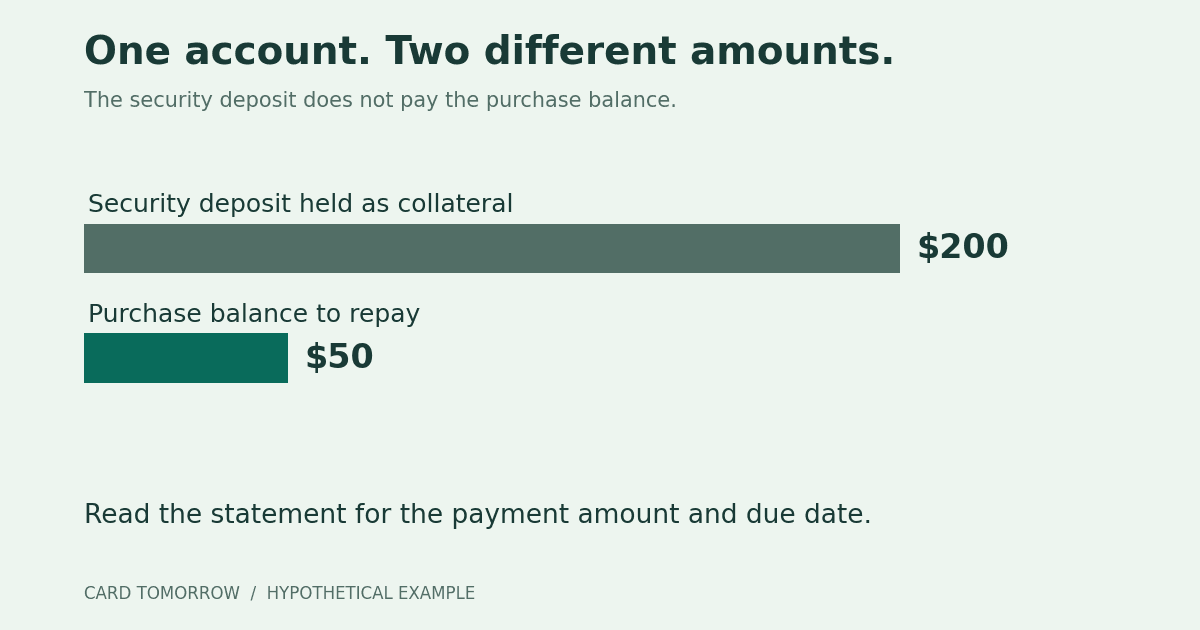
Imagine an account with a $200 security deposit. You then make a $50 purchase. Assuming no other activity or charges, the purchase balance is $50. The deposit remains collateral; it is not automatically used to pay that purchase.
Your statement tells you the amount due and the deadline. To understand what you need to pay to avoid purchase interest, check the account’s grace-period rules. This example does not promise a particular deposit requirement, credit limit, or interest rate.
Budget for the deposit and the bill
Before opening an account, set aside the deposit and check whether your normal budget can also cover the purchases you plan to make. Include any account fees. Money held as collateral may not be available for other expenses while the account remains secured.
A practical first-month plan is a purchase you already need, a payment reminder, and enough available money for the bill. If using automatic payments, still read the statement and check that the payment account has sufficient funds.
Paying interest is not a credit-building requirement
Paying on time and keeping balances low relative to available credit can support a healthy credit history. You do not need to carry debt from month to month or pay interest to build credit.
Ask which credit bureaus receive the account’s activity. Results depend on the reporting, your broader history, and the scoring model. No card or payment routine can promise a specific score increase.
Questions to ask before applying
Compare the account details alongside the upfront deposit. An account review or a possible move to an unsecured account is not a guaranteed upgrade.
- How much is the deposit, and how is the credit limit set?
- What fees and APRs apply?
- Which credit bureaus receive account activity?
- When and under what conditions can the deposit be returned?
- What happens to the deposit if the account is closed or a balance remains?
Sources & further reading Checked September 15, 2026
- Provider education: secured deposits and purchase balancesSource dated March 5, 2026.
- CFPB: grace periods and account agreementsFoundational reference; last modified December 28, 2022.
- CFPB: habits that help build creditFoundational reference; reviewed December 12, 2024.